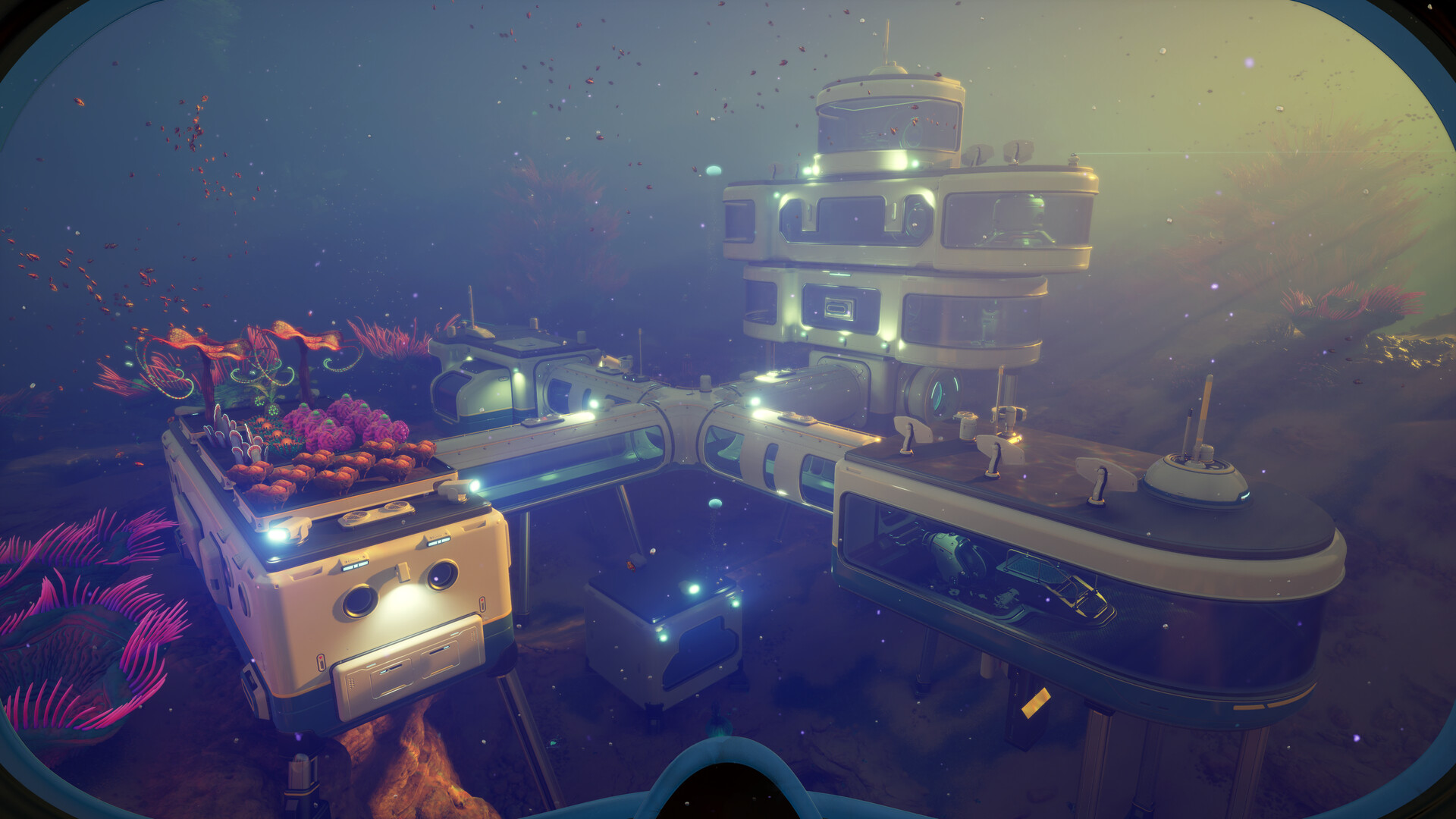
Subnautica 2 Habitat Builder base setup overview
This Subnautica 2 Habitat Builder base setup guide explains when to start building, what modules matter first, and how to avoid turning your early base into a material sink. The Habitat Builder is powerful because it converts routes into infrastructure: storage, power, crafting support, and safer returns. In Early Access, module costs and balance can change, but functional base planning remains useful.
Build when a base solves a route problem
Do not build a large base just because you unlocked the ability. Build when the base solves a real problem: you need storage near a resource loop, power near a work area, crafting near a route hub, or a safer checkpoint before deeper exploration.
Good reasons to build:
| Reason | Base role |
|---|---|
| Inventory overflow | Organized storage |
| Long resource loop | Forward checkpoint |
| Repeated crafting | Fabrication workflow |
| Co-op coordination | Shared hub and materials |
| Deep route prep | Staging area |
If the base does not support one of these roles, keep it small until your materials and routes justify expansion.
First Habitat Builder priorities
The first useful base is usually compact. It should help you store materials, craft efficiently, and prepare for the next route. Avoid overbuilding corridors and decorative rooms before power and storage are stable.
Recommended first module logic:
- Place the base where it supports a route.
- Add power before expanding.
- Add storage by crafting purpose.
- Keep crafting stations close to relevant storage.
- Expand only after the route proves valuable.
The first base location guide helps choose a site before spending materials.
Storage and workflow
Storage is the first base system that prevents wasted time. A messy base makes every craft slower because materials disappear into random lockers. Sort by purpose: common materials, strategic minerals, base parts, tool parts, vehicle parts, and overflow. Co-op teams should agree on categories before multiple players start dumping resources.
The storage organization guide gives a fuller system for keeping materials usable.
Power before expansion
Power should come before size. A large unpowered base is less useful than a small powered one with clear storage. Plan power around what the base actually does. A forward resource outpost may need only minimal support, while a main base needs enough stability for crafting, charging, and team workflow.
If you are unsure whether to expand, ask what the new room or module changes. If it does not unlock a route, improve storage, support crafting, or reduce travel time, delay it.
Using bases as route tools
Bases are not only homes. A small outpost near a resource loop can save more time than a large central base far from your actual objectives. Place outposts where they shorten repeated trips or reduce risk. Do not scatter outposts everywhere; each one should have a job.
Strong outpost jobs:
- Resource loop storage.
- Deep-route staging.
- Co-op regroup point.
- Vehicle support stop.
- Biome edge safety point.
If an outpost no longer supports an active route, stop feeding it materials.
Common Habitat Builder mistakes
The biggest mistake is building from inspiration instead of purpose. A beautiful base is satisfying, but early progression depends on tools, resources, and routes. Another mistake is placing the first base where the view is good but resources are inconvenient. You can build showcase spaces later; first, build a working hub.
Do not let base expansion consume all strategic materials. If a tool or vehicle unlock is near, preserve materials for progression.
What to do next
Use the Habitat Builder to support routes, not distract from them. Start with base building tips, choose a practical site with first base location, then build power and storage with power and storage.
Quick Habitat Builder checklist
Before placing new modules, ask whether the build shortens a route, improves storage, supports crafting, stabilizes power, or gives the team a staging point. If not, delay it. A compact base that makes every trip easier is stronger than a large base that consumes materials without improving progression.
Build review
After each base addition, check whether the base became faster to use. Can you craft with fewer searches? Can you leave for routes more quickly? Is power still stable? If the new module only made the base larger, stop expanding and fix workflow. Functional bases should save attention, not demand more of it.
Current Early Access coverage notes
This Subnautica 2 Habitat Builder guide page has been aligned with the expanded Subnautica 2 Early Access guide library. Subnautica 2 entered Early Access on May 14, 2026, and Unknown Worlds has said the game will continue receiving hot fixes, focused improvements, and larger updates that expand biomes, creatures, resources, tools, vehicles, and story content. Because of that, this guide should be read as a practical decision path rather than a fixed list of permanent coordinates.
When using this guide in the current build, start with one clear objective: safer opening progression, a specific crafting unlock, a repeatable resource route, or a more reliable return path. Check oxygen, food, water, storage, and tool slots before leaving base. If the route becomes unclear, return early and turn the information you gathered into a better second dive. That habit is more valuable than forcing one risky trip to do everything.
How this guide fits the expanded wiki
Game8-style guide hubs separate broad walkthroughs from item, tool, location, creature, biomod, and troubleshooting references. This site now follows the same coverage model while keeping the advice original and conservative. Use Subnautica 2 Habitat Builder Guide as the main context page, then move into the narrower entry pages when you need a specific material, module, facility, biome, or bug-fix answer.
The most useful next step is to connect this page with beginner guide, resource locations, crafting priorities. Those related guides cover the adjacent decisions that usually determine whether the next dive is productive: what to craft first, where to scout, how to manage oxygen, and when to stop expanding a route.
Expanded route depth
Use this page as part of a larger progression chain instead of reading it in isolation. Before acting on Subnautica 2 Habitat Builder guide, check what the next dive is supposed to accomplish, what material or scan would make the route safer, and what condition should make you turn back. That small planning step keeps Early Access changes from turning the guide into a brittle checklist.
For solo play, keep the route conservative: leave with spare inventory, return before oxygen becomes tight, and write down what changed after each trip. For co-op, assign one player to route safety, one to scanning or gathering, and one to storage or vehicle support. Shared progress works best when everyone knows the objective before leaving base.
If a patch changes an unlock, biome edge, recipe, or tool value, update the decision first rather than memorizing the old detail. The most useful follow-up reading is first base location, power and storage, crafting priorities, because those pages connect this topic to crafting, resources, route safety, and the next practical upgrade.