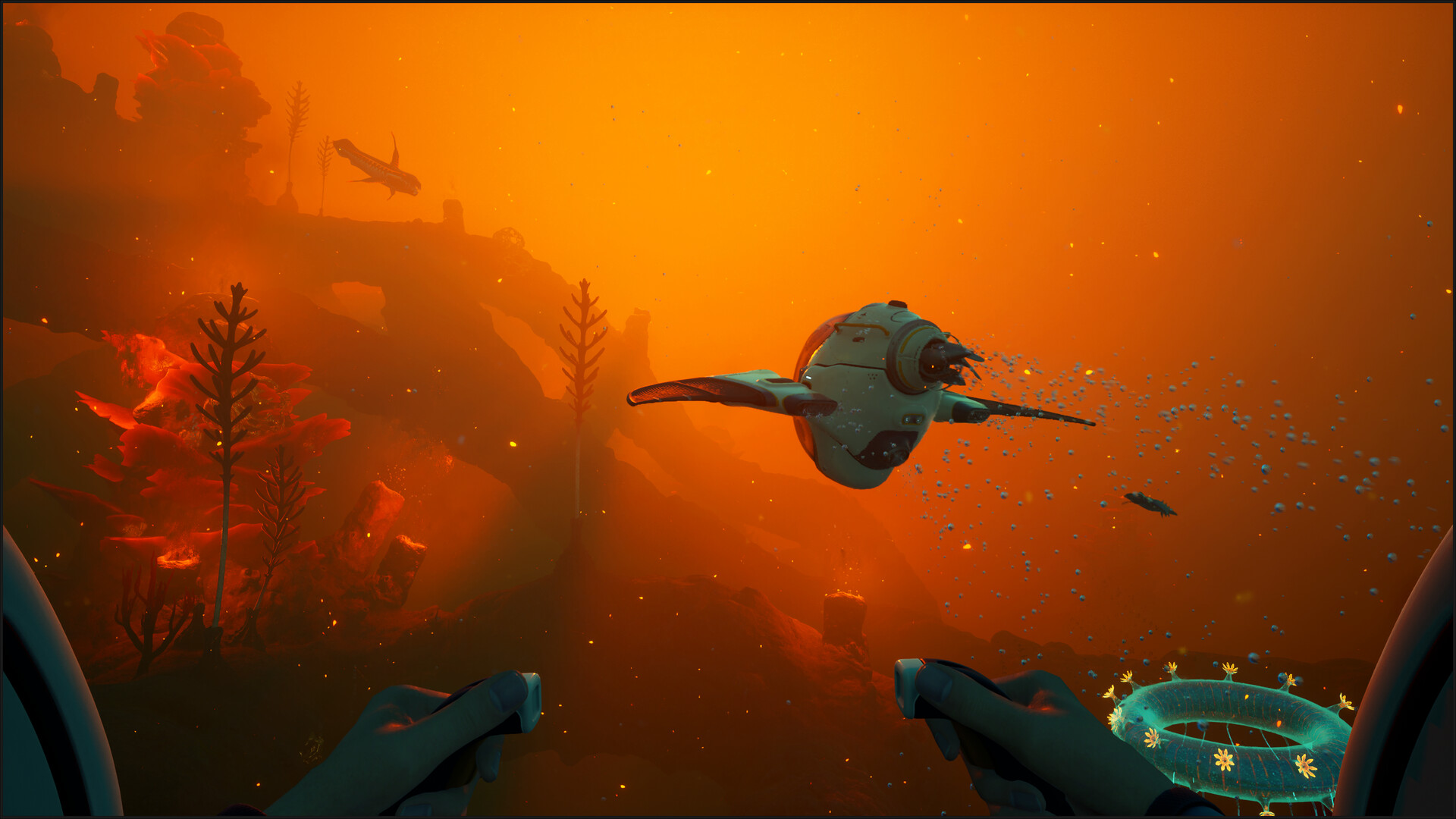
Subnautica 2 oxygen management overview
Subnautica 2 oxygen management is the core survival skill behind every route. Better tools, vehicles, and bases help, but most mistakes still start with staying too long after the objective is complete. Early Access balance may change oxygen upgrades or route difficulty, so this guide focuses on habits that remain useful: turn-back rules, route staging, and emergency recovery.
Set a turn-back rule before the dive
Do not decide when to leave after you are already deep in a route. Decide before leaving. A turn-back rule can be a timer, oxygen threshold, scan count, or route landmark. The rule should become stricter when caves, vertical drops, or unfamiliar biomes are involved.
Examples:
| Route type | Turn-back rule |
|---|---|
| Shallow resource loop | Return when target materials are gathered |
| New cave | Leave after first branch or first scan |
| Signal route | Turn back at the planned oxygen buffer |
| Deep scout | Leave after identifying one objective |
| Co-op route | Regroup when any player hits the threshold |
The deep dive checklist helps turn this into a pre-trip routine.
Oxygen risk is about attention
Oxygen drains while you scan, sort inventory, look for fragments, and make route decisions. The danger is not only distance; it is attention spent away from the return path. A short cave can become dangerous if you stop at every object. A long open route can be safe if landmarks and timing are clear.
Before interacting with anything underwater, face or remember the exit. This small habit prevents most panic returns.
Cave oxygen rules
Caves require larger buffers because exits are not always visible. Treat the first cave visit as a scouting pass. Enter, identify the route shape, take one useful action, then leave. Farming can wait until you know the exit.
Good cave rules:
- Do not chase resources through multiple side branches.
- Do not scan several targets unless the exit is obvious.
- Turn back earlier when the cave slopes downward.
- Leave if the route becomes hard to describe.
- Return with better tools instead of forcing the first trip.
For material-focused cave routes, read cave minerals.
Vehicle oxygen habits
Vehicles can make oxygen pressure feel less urgent, but they do not remove route risk. If you park and leave the vehicle, make sure you can find it again quickly. If you drive beyond known landmarks, set a return marker in your head before exploring on foot.
The Tadpole guide explains how to use vehicle range without overextending.
Emergency recovery
If oxygen pressure becomes serious, stop trying to finish the objective. Drop the task mentally and recover the route. Swim toward open water, recognizable landmarks, or the vehicle/base direction. Do not scan one more item, gather one more material, or sort inventory while low on oxygen.
In co-op, call oxygen pressure early. A teammate may know the route or help identify the return direction, but only if they have time to react.
What to do next
Oxygen management is a habit loop: plan the route, set the turn-back rule, complete one objective, and leave early. Continue with survival strategy, first hour guide, and deep dive checklist.
Quick oxygen checklist
Before every unfamiliar dive, pick the objective, choose a turn-back point, and decide what makes you abandon the route. During the dive, recheck oxygen after every scan or resource stop. If you start improvising the return path while oxygen is already low, you waited too long to leave.
Oxygen review after a close call
If a route creates a close call, do not repeat it unchanged. Decide what failed: the turn-back point was too late, the exit was unclear, the objective took too long, or the route needed better tools. Fix one cause before returning. Close calls are useful only when they change the next plan.
For co-op, review oxygen problems as a team issue, not one player’s mistake. If one player runs low, the whole route needs a clearer regroup rule or narrower objective. Shared retreat rules keep exploration from turning into separate emergencies.
When oxygen feels stressful on a route twice in a row, stop treating that route as normal progression. Either shorten the objective, improve the route marker, bring vehicle support, or delay the dive. Repeated stress is a planning signal.
Current Early Access coverage notes
This Subnautica 2 oxygen management page has been aligned with the expanded Subnautica 2 Early Access guide library. Subnautica 2 entered Early Access on May 14, 2026, and Unknown Worlds has said the game will continue receiving hot fixes, focused improvements, and larger updates that expand biomes, creatures, resources, tools, vehicles, and story content. Because of that, this guide should be read as a practical decision path rather than a fixed list of permanent coordinates.
When using this guide in the current build, start with one clear objective: safer opening progression, a specific crafting unlock, a repeatable resource route, or a more reliable return path. Check oxygen, food, water, storage, and tool slots before leaving base. If the route becomes unclear, return early and turn the information you gathered into a better second dive. That habit is more valuable than forcing one risky trip to do everything.
How this guide fits the expanded wiki
Game8-style guide hubs separate broad walkthroughs from item, tool, location, creature, biomod, and troubleshooting references. This site now follows the same coverage model while keeping the advice original and conservative. Use Subnautica 2 Oxygen Management as the main context page, then move into the narrower entry pages when you need a specific material, module, facility, biome, or bug-fix answer.
The most useful next step is to connect this page with beginner guide, resource locations, crafting priorities. Those related guides cover the adjacent decisions that usually determine whether the next dive is productive: what to craft first, where to scout, how to manage oxygen, and when to stop expanding a route.
Expanded route depth
Use this page as part of a larger progression chain instead of reading it in isolation. Before acting on Subnautica 2 oxygen management, check what the next dive is supposed to accomplish, what material or scan would make the route safer, and what condition should make you turn back. That small planning step keeps Early Access changes from turning the guide into a brittle checklist.
For solo play, keep the route conservative: leave with spare inventory, return before oxygen becomes tight, and write down what changed after each trip. For co-op, assign one player to route safety, one to scanning or gathering, and one to storage or vehicle support. Shared progress works best when everyone knows the objective before leaving base.
If a patch changes an unlock, biome edge, recipe, or tool value, update the decision first rather than memorizing the old detail. The most useful follow-up reading is survival strategy, deep dive checklist, first hour route, because those pages connect this topic to crafting, resources, route safety, and the next practical upgrade.