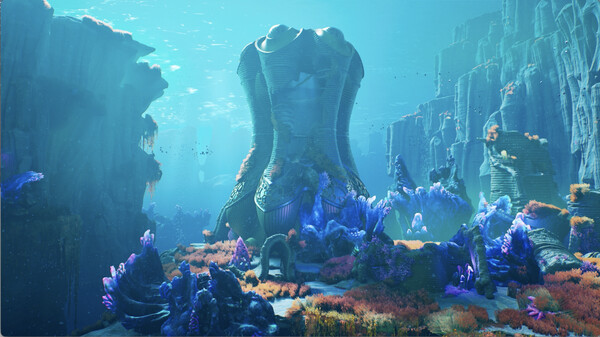
Subnautica 2 Crystal Caves guide overview
This Subnautica 2 Crystal Caves guide is written for cautious exploration: learn the route, understand visibility, identify useful resources, and leave before the cave turns into a navigation problem. Because Subnautica 2 is still changing in Early Access, treat biome labels and exact material distribution as update-sensitive. The practical skill is knowing how to approach a crystal-heavy cave environment safely.
Why crystal cave routes need preparation
Crystal cave environments are visually distinctive, but that does not automatically make them easy to navigate. Bright landmarks can repeat, vertical shafts can hide the exit angle, and resource clusters can tempt you into side paths. Before turning a crystal route into a farming route, scout it once with a conservative objective.
Your first visit should answer:
- Where is the safest entrance?
- What landmark marks the exit from inside?
- Which resources or scans are close to the main route?
- What oxygen or vehicle support is needed?
- What condition forces an immediate retreat?
If you cannot describe the route after leaving, it is not ready for farming.
Crystal Caves route plan
Treat the route as three zones: entrance, objective pocket, and return corridor. The entrance is where you orient. The objective pocket is where you scan or gather. The return corridor is the path you must protect from confusion. Do not let resource pickups pull you into a fourth unplanned zone.
| Zone | Action | Risk to avoid |
|---|---|---|
| Entrance | Face the exit and note landmarks | Losing the return angle |
| Main path | Move slowly and scan obvious targets | Stopping at every side detail |
| Resource pocket | Gather the planned materials | Filling inventory with extras |
| Return | Leave earlier than usual | Searching for exits at low oxygen |
This structure pairs well with the deep dive checklist.
What to bring into crystal caves
Bring enough survival margin to leave after a wrong turn. If you are not using a vehicle, be stricter with oxygen. If you are using a vehicle, remember that it can extend range but also encourage overconfidence. Either way, keep the first trip light and information-focused.
Prioritize tools that improve visibility, scanning, and route certainty. A scan that unlocks a useful craft is more valuable than a random mineral you can collect later. The scanner priorities guide explains how to decide what to scan first.
Resource and scan priorities
Do not gather every shiny object. Crystal cave areas can overload your attention with repeated shapes and valuable-looking materials. Decide whether the trip is for minerals, fragments, route mapping, or progression. A mixed trip should happen only after the route is familiar.
Good first-trip priorities:
- Main objective or signal interaction.
- Scan targets that are close to the route.
- One target material family.
- Exit landmarks and safe turnaround points.
- Notes for a second trip.
If you discover a new resource family, connect it to crafting priorities before hoarding it.
Common Crystal Caves mistakes
The biggest mistake is pushing deeper because the environment is readable from a distance. Distinctive visuals can still repeat. If you pass multiple similar crystal clusters, you may not know which one marks the exit when returning from another angle.
Another mistake is treating the first visit as a completion run. Crystal cave routes often deserve multiple passes: one for orientation, one for scanning, one for targeted gathering, and one for expansion or base planning. This staged approach is safer and more productive.
What to do next
Use crystal caves as a controlled progression step, not a blind deep dive. First scout the route, then farm it only when oxygen and landmarks are reliable. Continue with cave minerals, deep biome progression, and Tadpole upgrades if range becomes the bottleneck.
Quick Crystal Caves checklist
Treat every first crystal cave trip as information gathering. Confirm the entrance, identify the return angle, scan the highest-value target, and leave with enough margin to repeat the route. If the cave contains useful materials, plan a second focused farming pass instead of trying to gather everything on the scouting trip.
Crystal Caves route review
When you return, write the route in plain language: entrance landmark, first turn, useful scan, resource pocket, and exit cue. If you cannot describe all five pieces, do not farm the area yet. Repeat the scout with a smaller objective. Good route memory is more valuable than one risky haul of materials.
Current Early Access coverage notes
This Subnautica 2 Crystal Caves guide page has been aligned with the expanded Subnautica 2 Early Access guide library. Subnautica 2 entered Early Access on May 14, 2026, and Unknown Worlds has said the game will continue receiving hot fixes, focused improvements, and larger updates that expand biomes, creatures, resources, tools, vehicles, and story content. Because of that, this guide should be read as a practical decision path rather than a fixed list of permanent coordinates.
When using this guide in the current build, start with one clear objective: safer opening progression, a specific crafting unlock, a repeatable resource route, or a more reliable return path. Check oxygen, food, water, storage, and tool slots before leaving base. If the route becomes unclear, return early and turn the information you gathered into a better second dive. That habit is more valuable than forcing one risky trip to do everything.
How this guide fits the expanded wiki
Game8-style guide hubs separate broad walkthroughs from item, tool, location, creature, biomod, and troubleshooting references. This site now follows the same coverage model while keeping the advice original and conservative. Use Subnautica 2 Crystal Caves Guide as the main context page, then move into the narrower entry pages when you need a specific material, module, facility, biome, or bug-fix answer.
The most useful next step is to connect this page with beginner guide, resource locations, crafting priorities. Those related guides cover the adjacent decisions that usually determine whether the next dive is productive: what to craft first, where to scout, how to manage oxygen, and when to stop expanding a route.
Expanded route depth
Use this page as part of a larger progression chain instead of reading it in isolation. Before acting on Subnautica 2 Crystal Caves guide, check what the next dive is supposed to accomplish, what material or scan would make the route safer, and what condition should make you turn back. That small planning step keeps Early Access changes from turning the guide into a brittle checklist.
For solo play, keep the route conservative: leave with spare inventory, return before oxygen becomes tight, and write down what changed after each trip. For co-op, assign one player to route safety, one to scanning or gathering, and one to storage or vehicle support. Shared progress works best when everyone knows the objective before leaving base.
If a patch changes an unlock, biome edge, recipe, or tool value, update the decision first rather than memorizing the old detail. The most useful follow-up reading is cave minerals, deep biome progression, deep dive checklist, because those pages connect this topic to crafting, resources, route safety, and the next practical upgrade.